
F the Discount

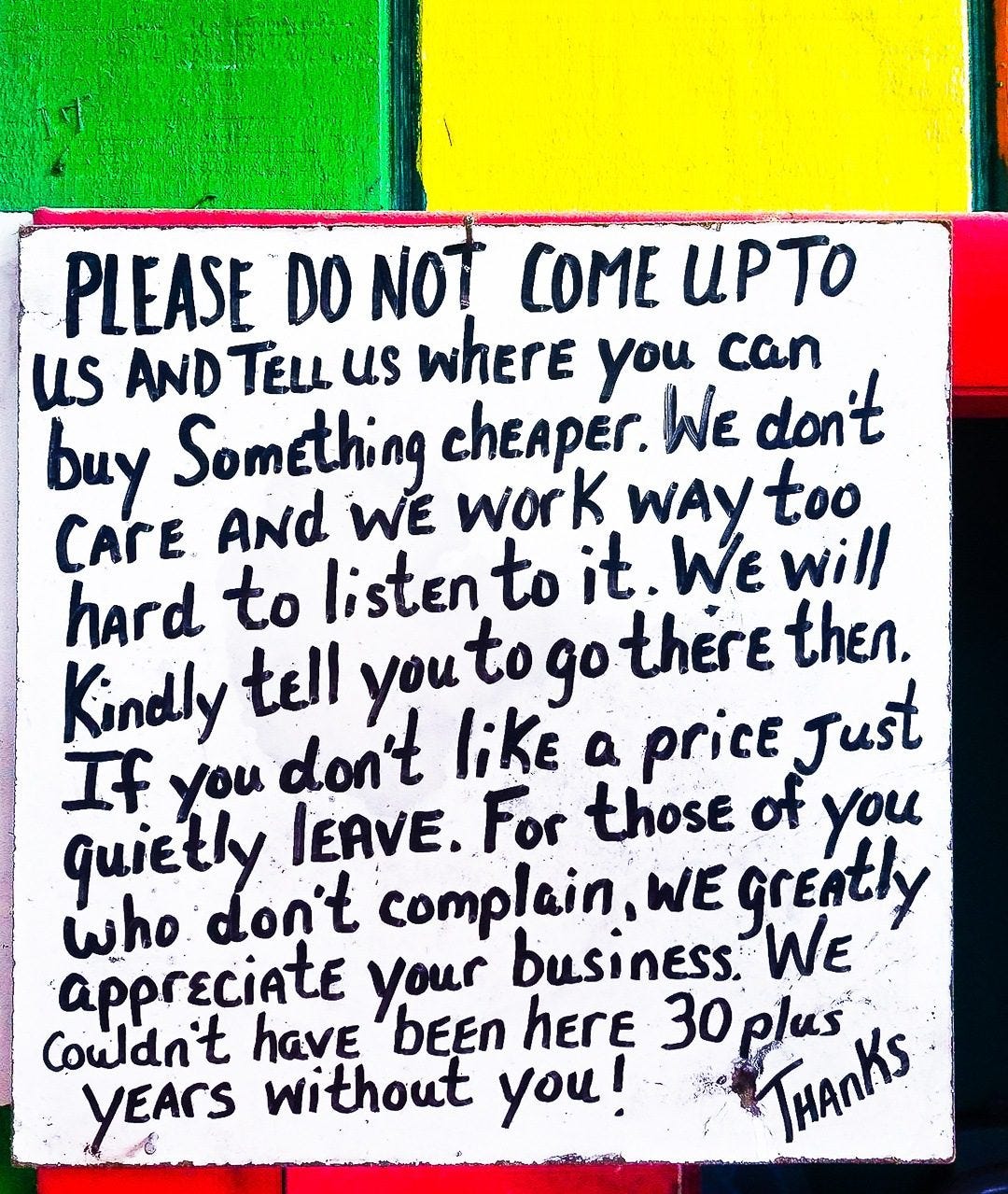
The prospect asks, “So… what would this cost?”
You take a breath, name your fee. Silence.
Your mind cranks up the chatter: That sounded high. Say something. Offer a deal. Fill the space.
The prospect blinks, calculating.
The silence thickens until you blurt, “But hey, you tell me what works for you.”
Their shoulders drop. They smile.
Your mind purrs, See? Connection. Safety.
But when the call ends, your body tells the truth; a heaviness in your chest, that hollow feeling that whispers: why don’t you believe in yourself?
That’s why I say F the Discount.
Because every time you reduce your rate to make someone else comfortable, you teach them to value your work the same way you just did: conditionally. You teach your nervous system that belief in your value is flexible. You dilute the current of trust that keeps your work alive. The money may come in, but the integrity leaks out.
I get it.
Childhood trauma trained my nervous system to believe that rejection equals danger. It wired me to scan every interaction for threat. That survival code grew up with me and evolved into an adult pattern of hypersensitivity to disapproval; one that quietly shaped how I did business.
Every time I named my price, my body flooded with the same old chemistry. My brain didn’t recognize a sales call; it thought I was back in the room where love had conditions. It braced for disapproval, punishment, loss of safety. The instinct to drop my price or over-deliver wasn’t a strategy; it was self-protection. My grown-up version of the reflex that once kept me alive: make them happy, stay safe.
As I began the long journey of healing, my pricing stopped being a negotiation for acceptance. I began to separate value from approval. I saw that my rate wasn’t a measure of worth. It was a structure that guarded my energy, my time, and my craft.
That shift turned pricing into a spiritual practice.
This is the essence of Protect Your Value, one of the five modules in F the Formula. It transforms pricing from performance into practice. It teaches solo professionals to build containers strong enough to hold the weight of their genius.
Here is some of what I teach…
Sacred Work, Sacred Structure
Every kind of meaningful work needs structure. Without it, even the best work burns people out. Structure protects your time, energy, and focus. Pricing is one of the most important structures you have. It’s how you make sure the exchange between you and your clients is balanced and fair.
Sacred pricing starts with honesty about what it takes to do your work well. It reflects the years you’ve spent learning, the energy you bring to each client, and the emotional cost of showing up fully. It’s not about inflating your worth or chasing prestige. It’s about setting a number that keeps both sides supported and accountable.
When you see pricing as structure, the conversation changes. You stop feeling like you’re asking for something and start recognizing that you’re creating a container that protects the work.
The Real Value
In coaching, creative, and solo professional work, you aren’t selling time; you’re creating transformation. The real value lies in the shift your client experiences because of your work.
Value-based pricing means you price according to outcomes, not hours. Think about what your clients gain: clarity, focus, confidence, or a major life or business breakthrough. Then consider the long-term impact of those results. When you frame your work this way, your price naturally starts to reflect its true value.
When clients invest at a level that matches the change they want, they take the process seriously. They show up ready. That creates better results for them and a cleaner, more sustainable rhythm for you.
Value-based pricing turns the money conversation into a mutual agreement about commitment and respect. It ensures that both you and your clients have skin in the game—and that the work gets the space it deserves to create real impact.
Before you set a price, take stock of three things:
The transformation your work delivers.
The effort and resources it takes from you to deliver it.
The level of support your client receives because of it.
Once you’re clear on that, choose a price that feels steady in your body. The right number gives you enough space to deliver quality work without resentment or fatigue. It lets your clients trust that you’ll show up clear, present, and consistent.
Aligned pricing builds confidence on both sides. You know what it takes to do your best work, and your clients can feel that you’re standing on solid ground.
Handling Discount Requests
When someone asks for a lower price, don’t rush to fill the silence.
Pause. Breathe. Let your body catch up before your mouth jumps in.
Then choose one of three moves that protect both your integrity and theirs.
Adjust the scope, not the rate.
If their budget’s tight, reduce the deliverables or number of sessions instead of cutting your price. Keep your rate consistent so your value stays clear.Design access into your business.
If you want to make your work more available, plan for it. Create group offers, short courses, or scholarship spots ahead of time. Generosity works best when it’s built into the model, not improvised in the moment.Let timing do the sorting.
If the fit feels right but the funds aren’t there, don’t force it. Let them circle back when they’re ready. A good match will come back stronger when the timing’s aligned.
Each of these options keeps the boundaries clear and the respect mutual. You stay grounded, they stay seen, and the relationship stays clean. That’s what a healthy business looks like: clarity, honesty, and no guilt on either side.
In closing
“F the discount” is not just a clever headline. It is a mantra for how you see yourself.
When you stop discounting your work, you stop discounting yourself.
Your price stops being a number and starts being a boundary.
Your body of work becomes a declaration: I take this seriously. You should too.
It’s the moment you stop selling your services and start embodying your worth.
The moment you realize your craft is a covenant, not a commodity.
Every rate you hold becomes a quiet act of rebellion in a culture that worships discount codes and swipe-right closing cycles.
It says, my pace is intentional, my presence is earned, my time is sacred.
It says, I built this with my own hands and my own healing, and it deserves to stand on solid ground.
It says, Your budget will not determine my worth.